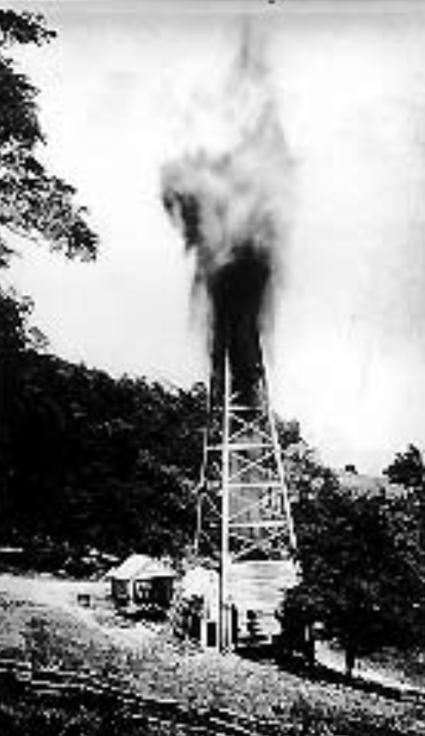
On May 1, 1860, John Castelli Rathbone completed a successful oil well at Burning Springs Run in what is now West Virginia, producing roughly 100 barrels per day. The well marked the first significant oil discovery outside Pennsylvania, extending America's young petroleum industry deeper into the Appalachian region and igniting a new boom.
The discovery came less than a year after the Drake Well in neighboring Pennsylvania launched the modern oil era. Burning Springs quickly transformed from a remote wilderness area into a bustling oil camp filled with derricks, storage tanks, and river transport activity. During the Civil War, oil from the region became strategically important for lubrication and illumination, while the Little Kanawha River served as a key shipping route for barrels bound downstream to refineries.
Rathbone's success demonstrated that petroleum reserves extended beyond Pennsylvania, accelerating exploration across the Appalachian Basin and helping establish West Virginia as an early contributor to America's growing oil supply.