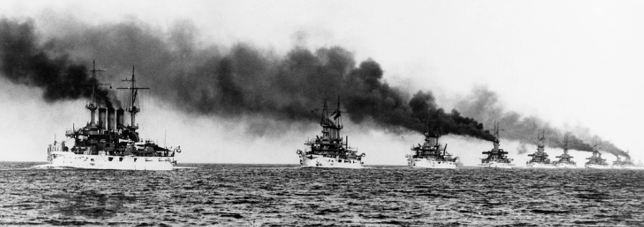
On May 7, 1919, the U.S. Navy formally expanded its program to convert major warships from coal to oil fuel, reflecting petroleum's rising strategic importance in global power projection. Oil's higher energy density meant ships could travel faster, further, and with fewer refueling stops — a decisive advantage in both peacetime operations and future conflicts.
At the time, the U.S. fleet was moving away from coal-fired boilers that required large crews and frequent coaling stops. Oil-fueled ships could operate with smaller crews, refuel more quickly at specialized bases, and enjoy improved endurance at sea. The shift helped strengthen demand for U.S. crude production and refining capacity — U.S. oil output had grown from just about 29 million barrels in 1910 to more than 175 million barrels by 1920, driven in part by both domestic industry and emerging naval requirements.
The Navy's oil conversion program also spurred investments in fuel storage and logistics infrastructure, which later proved critical during World War II as petroleum became the lifeblood of mechanized warfare.