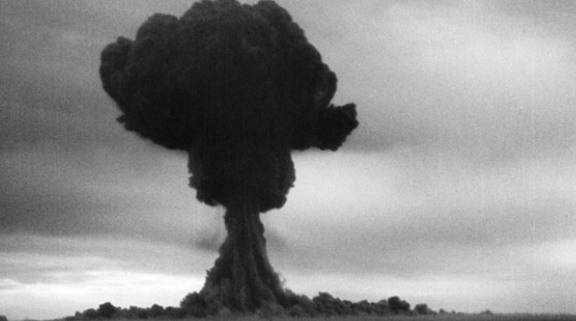
On August 29, 1949, the Soviet Union conducted its first successful nuclear test, codenamed First Lightning, at the Semipalatinsk Test Site in Kazakhstan. The blast marked the USSR's entry into the nuclear arms race, just four years after the United States' atomic bombings in World War II.
The detonation shattered America's monopoly on nuclear weapons and intensified Cold War tensions, triggering an era of rapid arms development and geopolitical brinkmanship. With this test, the balance of power shifted, ushering in decades of nuclear deterrence and global uncertainty.
What began as a single explosion became a defining moment in modern history—reshaping diplomacy, warfare, and international security for generations.