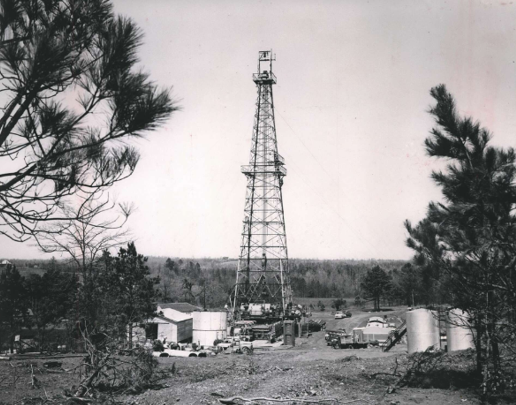
On May 22, 1933, the Humble and Magnolia No. 1 J.F.W. Kobs well was completed, marking the official discovery of the Tomball oil field in Harris County, Texas. This prolific well initially tested at an impressive 1,656 barrels of oil per day, immediately sparking a drilling frenzy in the region. The discovery proved to be a major win for Humble Oil & Refining (now part of ExxonMobil) and Magnolia Petroleum, reinforcing Texas as the undisputed heart of American energy production during the Great Depression.
The Tomball field was unique because it was discovered using early reflection seismograph technology, a cutting-edge method at the time that allowed geologists to "see" the salt dome structures beneath the surface. To manage the rapid influx of workers and equipment, the Humble Oil company practically built the town of Tomball itself, providing housing, utilities, and even a hospital for its employees. This paternalistic "company town" model helped stabilize the local economy and ensured a dedicated workforce for the field's long-term development.