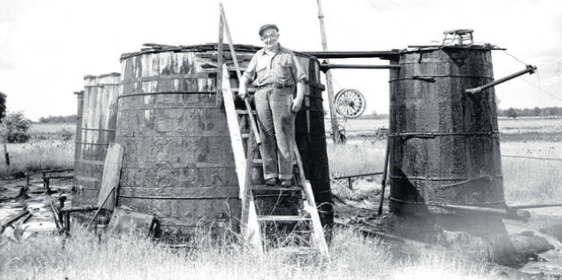
On May 19, 1885, Benjamin Faurot struck oil in northwest Ohio, leading to the discovery of the Lima Oilfield. This discovery transformed the region into one of the most productive oil hubs of the late 19th century, eventually outproducing all other fields in the United States at the time. While Faurot was originally drilling for natural gas to power his local paper mill, he instead hit a reservoir of "sour" heavy crude at a depth of 1,250 feet.
The Lima field was so massive that by 1890, it was responsible for nearly one-third of the nation's total petroleum production. This surge in supply helped position Ohio as a dominant force in the early American energy landscape, though the high sulfur content of the oil initially presented a challenge for refiners. It was this specific heavy crude that prompted John D. Rockefeller's Standard Oil to develop new refining techniques, essentially birthing the modern midstream and downstream sectors.
This discovery marked a critical shift in the industry as production moved westward from the original Pennsylvania fields. The infrastructure built to handle Lima's output laid the groundwork for large-scale interstate pipelines and stabilized the American market during a period of rapid industrial expansion. The legacy of the Lima field remains a testament to the unexpected breakthroughs that define oilfield history.