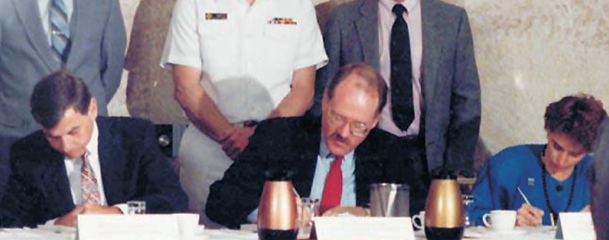
On May 15, 1989, the Hanford Tri-Party Agreement was signed between the U.S. Department of Energy (DOE), the Environmental Protection Agency (EPA), and the Washington State Department of Ecology. This landmark agreement laid out a comprehensive plan to clean up the Hanford Site in Washington, once a key facility in the U.S. nuclear weapons program. The site, which produced plutonium during World War II and the Cold War, left behind significant radioactive and hazardous waste. The agreement established legally binding milestones for cleanup efforts and brought transparency and accountability to the remediation process. It also encouraged public involvement, allowing community input into environmental decisions. The Tri-Party Agreement remains a pivotal moment in environmental management, marking one of the largest and most complex cleanup efforts in U.S. history.