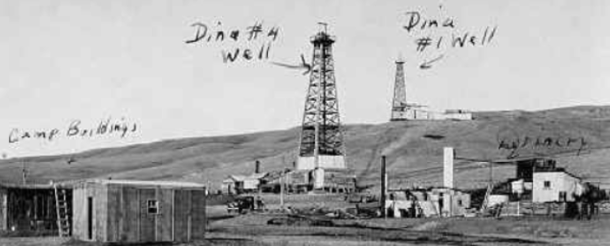
On October 28, 1926, a desperate gamble turned into a legendary discovery when rancher Ira Yates allowed the Transcontinental Oil Company to drill on his drought-stricken land near Pecos, Texas. The result was the Yates 1-A Well, which struck a massive petroleum reservoir beneath the arid terrain of the Permian Basin.
The first well produced nearly 500 barrels of oil per day, but subsequent drilling revealed the true scale of the find—over 12,000 barrels daily at peak flow. With no pipeline infrastructure in the region at the time, oil was temporarily stored in tanks until transport routes could be developed, underscoring how infrastructure often lags behind discovery in frontier energy regions.
The Yates Field quickly became one of the largest and most productive oilfields in U.S. history, transforming the economic landscape of West Texas and securing Yates an estimated $18 million fortune. Beyond personal success, this discovery solidified the Permian Basin's role as an energy powerhouse, a legacy that endures nearly a century later as the region continues to fuel America's energy independence.