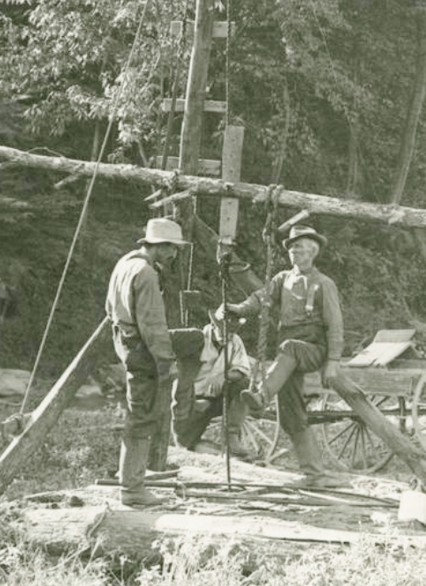
On March 10, 1829, driller Martin Beatty was boring for brine on a farm near Burkesville, Kentucky when he unexpectedly struck oil at a depth of about 171 feet — one of the earliest documented oil shows in American history, decades before the famous Titusville well. At the time, petroleum was not yet an energy commodity and was largely viewed as a nuisance during salt-well drilling.
Rather than being refined for fuel, the crude oil from the Beatty well was bottled and sold as medicine, promoted for ailments ranging from rheumatism to digestive problems. This "rock oil" trade reflected early 19th-century beliefs about petroleum's healing properties and helped introduce oil to the public long before industrial uses emerged.
Kentucky's early salt-and-oil wells demonstrated that hydrocarbons were widespread in Appalachian geology. These accidental discoveries quietly laid the groundwork for later commercial oil exploration, proving that petroleum existed in recoverable quantities years before the modern oil industry was born.