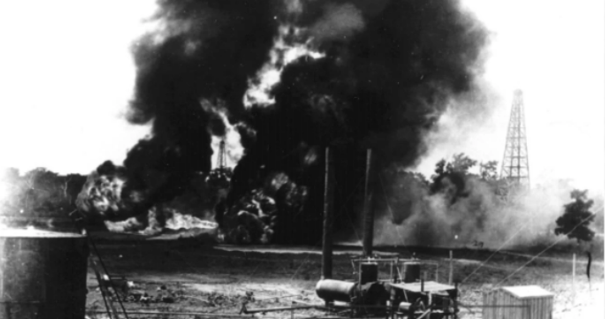
On December 17, 1910, the Dorthulia Dunn No. 1 well erupted at the Petrolia oilfield in Clay County, Texas, producing around 700 barrels per day from a depth of 1,600 feet. This gusher marked a turning point for West Texas oil exploration, signaling the region's potential for large-scale petroleum production.
The well's success spurred additional drilling and attracted investors, laborers, and supporting industries, transforming Petrolia into a hub of energy activity. Its impact extended beyond the local economy, contributing to the broader development of Texas as a leading oil-producing state.
The Petrolia gusher exemplifies the transformative power of early 20th-century oil discoveries, laying the groundwork for future exploration and shaping America's energy landscape.