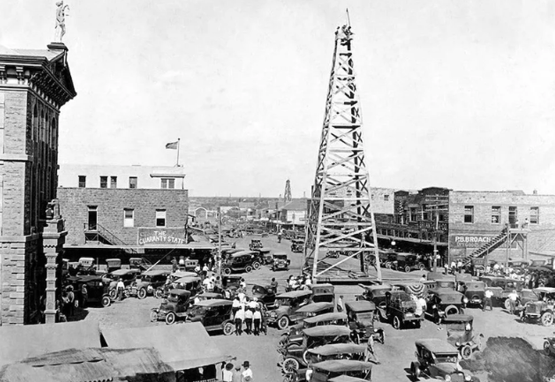
The impact was immediate and dramatic. Breckenridge's population exploded from roughly 900 residents in 1919 to more than 30,000 by 1921, fueled by drillers, speculators, and oilfield workers flooding Stephens County. Hundreds of wells were drilled in and around the field, and at its peak the Breckenridge area was producing tens of thousands of barrels per day, making it one of the most productive oil regions in Texas during the early 1920s.
Beyond production, the Breckenridge Field helped accelerate the development of pipeline infrastructure, refineries, and service companies across North Texas. The boom also highlighted the risks of rapid development — overdrilling, price collapses, and fire hazards became common — but its output played a critical role in supplying U.S. energy needs during a period of explosive industrial growth and rising automobile use.