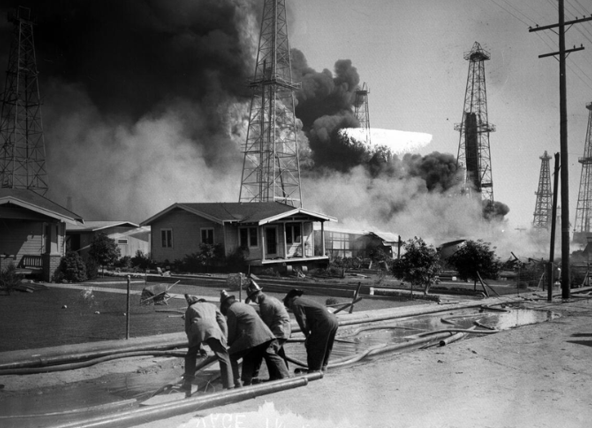
On April 24, 1909, the Los Angeles Oil Field began producing commercial quantities of crude, marking a major turning point for Southern California's energy development. What had once been ranchland and scattered neighborhoods quickly became one of the most productive urban oil regions in the world, fueling rapid industrial growth across the expanding West Coast.
By the early 1910s, the Los Angeles City field was producing tens of thousands of barrels per day, and California soon rose to become one of the top oil-producing states in the nation. At its peak, the broader Los Angeles Basin fields accounted for a significant share of U.S. petroleum output — with wells drilled in densely populated areas, sometimes just blocks from homes and businesses. The region's production helped supply fuel oil for ships, gasoline for the growing automobile market, and feedstock for new refineries that anchored California's emerging petroleum economy.