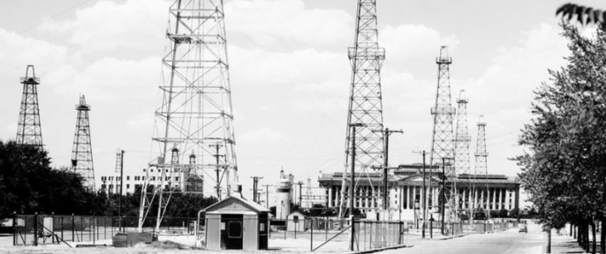
On April 21, 1930, the Seminole Oil Field in Oklahoma began producing commercial quantities of crude oil following a string of successful wells that confirmed the region as a major petroleum center. The discovery triggered an intense drilling boom that reshaped the local economy and strengthened Oklahoma's role in America's expanding oil supply during a period of rapid industrial growth.
Within just a few years, the greater Seminole area became one of the most productive oil districts in the world. By 1935, fields across Seminole and neighboring counties were collectively producing hundreds of thousands of barrels per day, helping push the United States to the forefront of global oil output. The boom also transformed once-rural towns into crowded energy hubs — Seminole's population surged from a few thousand residents to more than 15,000 almost overnight as workers, investors, and service industries rushed in.
The Seminole field's explosive growth illustrated how quickly petroleum discoveries could shift economic power, turning a quiet agricultural region into a cornerstone of America's early oil dominance.