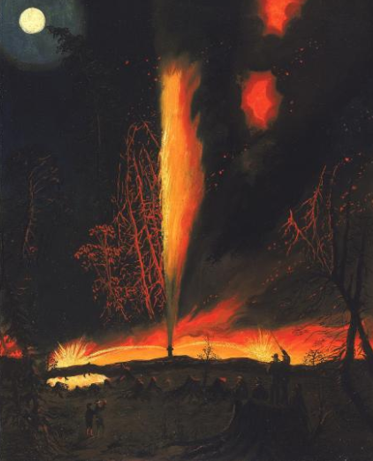
On April 17, 1861, a highly pressurized oil well at Buchanan Farm near Rouseville erupted in a violent blowout and burst into flames, killing oil pioneer Henry Rouse and more than a dozen spectators. The explosion occurred during the earliest years of America's oil rush, when drillers had little understanding of underground pressure and virtually no safety controls. Witnesses reported a towering column of fire and smoke visible for miles, marking one of the first major industrial disasters in U.S. petroleum history.
The accident came just two years after the Drake Well launched America's first oil boom, and by 1861 northwestern Pennsylvania was producing thousands of barrels per day using primitive wooden derricks and open storage pits. The Civil War had begun only five days earlier, and oil from the region would soon become strategically important for lubrication, lighting, and machinery. Newspapers compared the blast to battlefield artillery, and the tragedy helped spark early conversations about well control and fire prevention in a rapidly expanding industry.