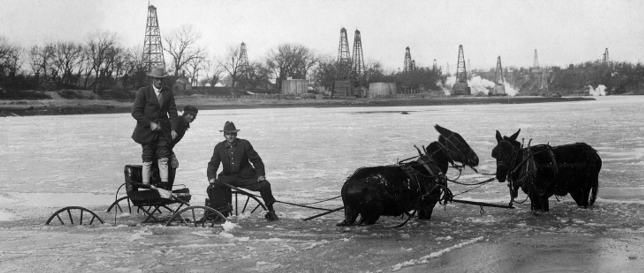
On March 12, 1912, independent wildcatter Thomas B. "Dry Hole Slick" Slick struck a major pay zone with his No. 1 Wheeler well, uncovering the Drumright-Cushing oilfield in central Oklahoma. The discovery came after years of risky drilling that earned Slick his famous nickname—and instantly turned him into one of the most successful independents of the era.
The Drumright-Cushing field quickly became one of the most productive oil regions in the United States. At its peak, the broader Cushing area produced hundreds of thousands of barrels per day, transforming the region into a major storage and trading hub that would later be known as the "Pipeline Crossroads of the World."
The boom reshaped Oklahoma's economy almost overnight. Towns like Drumright exploded in population, and oil revenues fueled infrastructure, rail expansion, and refineries—cementing Oklahoma's place as a leading U.S. oil-producing state during the early 20th century.