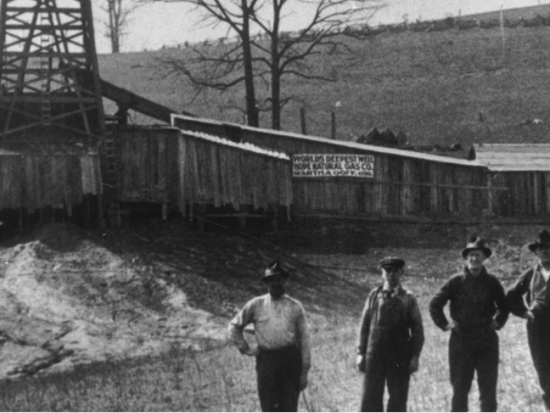
The record was achieved during World War I, when natural gas demand surged to support steelmaking, manufacturing, and wartime industry. At a time when most oil and gas wells were far shallower, reaching this depth demonstrated both the engineering limits of early drilling technology and the growing importance of the Appalachian Basin as a major gas-producing region.
The achievement pushed drilling practices forward and proved that deeper subsurface horizons could be reached safely and productively. It also helped accelerate the industry's transition toward rotary drilling systems, which soon became essential for deeper and more complex wells.