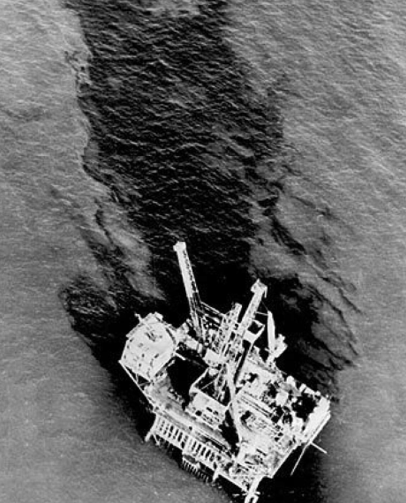
On January 28, 1969, a blowout on Union Oil's offshore Platform A in the Dos Cuadras Field ruptured the seabed beneath the Santa Barbara Channel, unleashing one of the most influential oil spills in U.S. history. Over the next 11 days, an estimated 80,000–100,000 barrels of crude oil flowed into coastal waters, coating beaches and killing thousands of seabirds, fish, and marine mammals.
At the time, offshore California was producing roughly one-third of the state's oil, and Platform A alone had been seen as a symbol of technological progress. Instead, the spill exposed weaknesses in well-control practices and offshore oversight, prompting tighter federal regulations and accelerating the creation of modern environmental safeguards tied to offshore oil and gas operations.