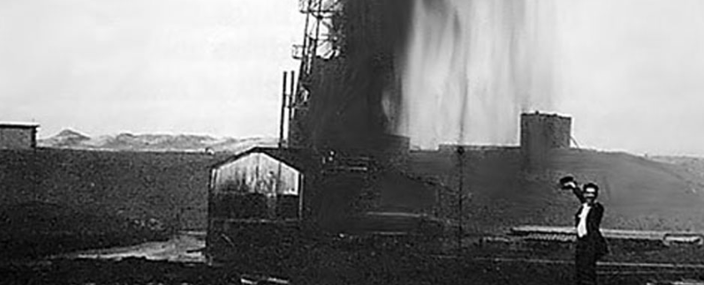
On October 15, 1927, a drilling crew at Baba Gurgur, near Kirkuk, Iraq, struck one of the most powerful oil gushers in history. Operated by the Turkish Petroleum Company (later the Iraq Petroleum Company), the well erupted with an estimated 95,000 barrels of oil per day, flowing uncontrollably for nearly 10 days before it was capped.
This spectacular discovery revealed the immense oil potential beneath Iraq's soil and marked the beginning of its rise as a global energy powerhouse. The Baba Gurgur field would go on to produce for decades, supplying crude for refineries across the Middle East and fueling the early industrial growth of the region.
The event also shifted the geopolitical focus of oil exploration—transforming the Middle East from a frontier into one of the most strategic energy zones on Earth.