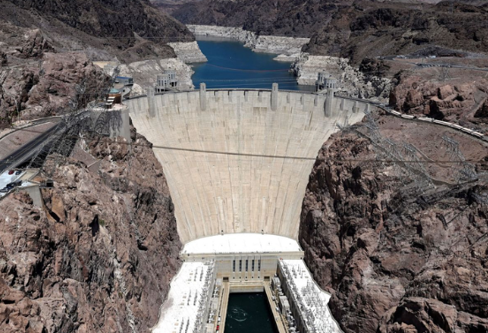
Over time, upgrades pushed Hoover Dam to its peak capacity of more than 2,000 megawatts, enough to power nearly 1.3 million homes. Unlike coal or oil plants, it consumed no fuel, relying instead on the steady flow of the Colorado River. At its height, the dam produced more than 4.5 billion kilowatt-hours annually, proving that renewable hydroelectric power could anchor an entire region's energy system.
Hoover Dam not only energized a city but also became a symbol of how engineering and renewable resources could work together to build modern energy infrastructure—a legacy that still endures today.